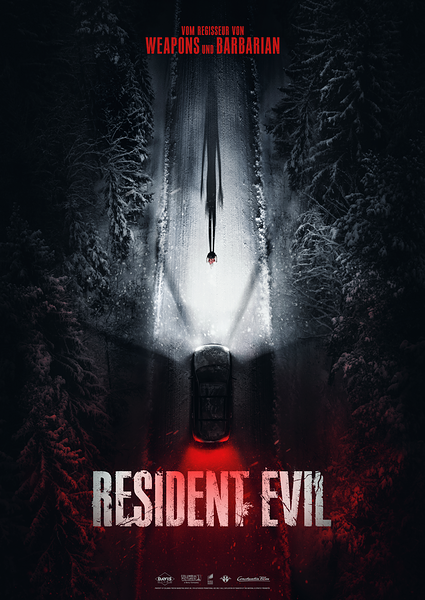
Starring: Austin Abrams, Zach Cherry and Kali Reis
Directed by: Zach Cregger
Rated: R
Running Time: 95 minutes
Sony Pictures
Our Score: 4 out of 5 Stars
I think the biggest reason a video game franchise like “Resident Evil” hasn’t translated particularly well to the big screen is because it’s way too much like an anime franchise. The games have a wide, sprawling cast of characters with complicated backgrounds and side drama, bombastic villains, bizarre detours and a continuity that eventually requires homework. So, when you pitch all of that as a movie, I assume most people eventually throw their hands up and ask, “It still has zombies and guns, right?”
Enter Zach Cregger, the new darling of Hollywood, who strips away most of those pretenses and gives longtime fans, and audiences who may not know a damn thing about the franchise, something much simpler. A guy trapped in a nightmare who desperately wants to get the hell out.
When we meet Bryan (Austin Abrams), he’s going back and forth with his pregnant partner on the phone while delivering an organ because he’s essentially a discount medical courier. You might need the organs that bad if you’re paying the guy $15 an hour. Bryan’s conversation isn’t going particularly well with his partner, and it’s obvious he needs to get home to hammer out their issues. Unfortunately, he gets one more transport job. Sure, it’s snowing. Sure, it’s to Raccoon City in the mountains. Sure, his girlfriend sounds like she’s about to end their relationship. But a job’s a job.
Bryan, ignoring his personal responsibilities, takes the organ and heads toward Raccoon City General Hospital, completely unaware that this will be the last normal occurrence in his life.
The first thing that struck me about Cregger’s vision of “Resident Evil” is how closely it replicates the rhythm of survival horror. Bryan doesn’t necessarily behave like someone playing a survival-horror game. He screws up way too much for that. Instead, Cregger shoots his journey in a way that recreates the anxiety of being the player.
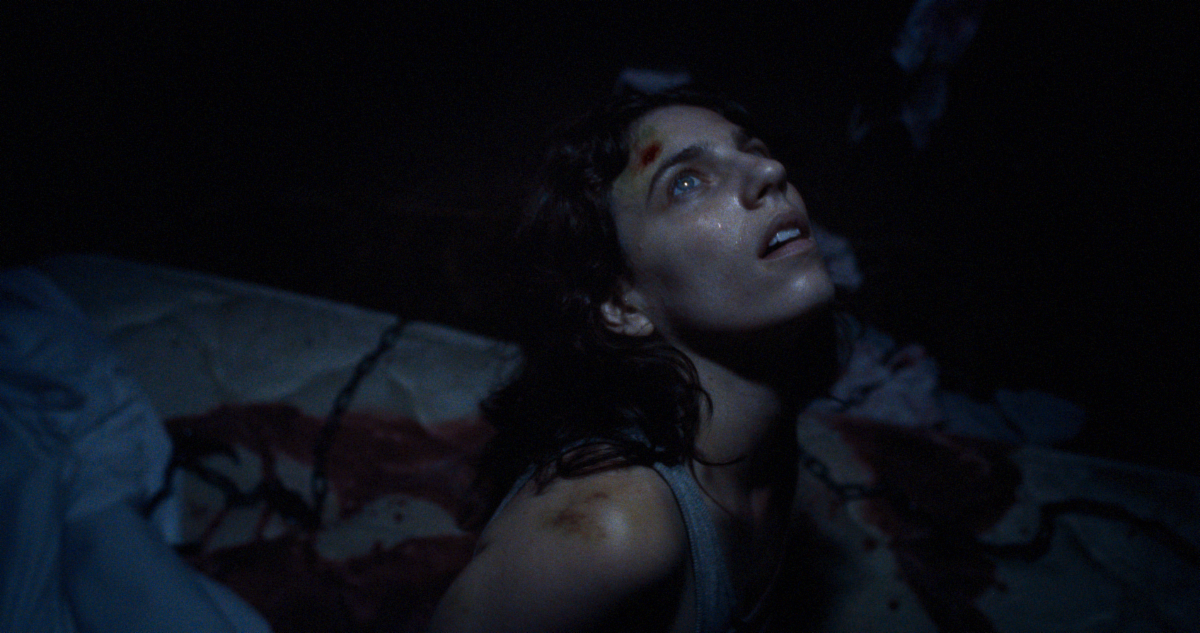
There’s uncertainty as Bryan peers through his windshield, snowflakes obscuring whatever might be waiting in the darkness. There’s dread when he encounters a woman who isn’t quite all there. Jump scares eventually give way to claustrophobia as he finds himself navigating small farmhouses, a Winnebago, dark tunnels and other places where every doorway feels like it could be hiding something horrible.
Cregger understands that pit in your stomach when you’re navigating the unknown. The difference is that we know damn good and well what kind of unknown Bryan has stumbled into.
And it’s filled with zombies, body horror and all sorts of revolting imagery that’ll require decades of therapy.
The creatures aren’t merely shambling corpses waiting for Bryan to shoot them, either. Bodies morph grotesquely. The infected are ravenous and bloodthirsty, and some evolve into things that feel considerably more horrific than the word “zombie” can adequately describe. Nothing here necessarily scared the hell out of me, but Cregger knows how to deploy an effective jump scare and, more importantly, how to make you dread whatever might be waiting around the next corner.
Boosting those scares are the laughs provided by Bryan, who might as well be the pizza delivery boy version of Bruce Campbell. What he lacks in charisma and strength, he makes up for with unintentional humor, relatability and an almost impressive inability to properly use the firearms he comes across. Abrams makes Bryan incredibly easy to root for because he never suddenly transforms into the badass protagonist this kind of movie usually demands. He screws up. He panics. He makes decisions you wouldn’t make in a million years.
But you still desperately want to see the guy survive. The film’s breakneck pace is another benefit because the actual plot is remarkably simple. Bryan goes to Raccoon City. Things go horribly wrong. He tries to survive. That’s basically it.
You aren’t going to learn much about Raccoon City, the Umbrella Corporation or even what exactly has happened to everyone. There are hints and conversations about the larger mythology, but Cregger doesn’t seem particularly interested in stopping the movie to explain it. That’s because Bryan doesn’t need those answers. When something disgusting is chasing you through a dark tunnel, you probably don’t need a detailed explanation of the T-virus. You need to know what the hell that thing is and whether you can kill it.
That simplicity makes “Resident Evil” feel less like an attempt to launch another sprawling cinematic universe and more like a side campaign taking place somewhere within one. The enormous mythology is still out there. Major events are presumably happening somewhere else. Bryan just had the profound misfortune of wandering into Raccoon City while everything went to hell. For longtime “Resident Evil” fans, that approach works exceptionally well. For the uninitiated, I’m a little less certain.
It’s difficult for me to completely put myself in the shoes of someone who doesn’t know “Resident Evil” because it was one of the first games I played on PlayStation ages ago. I already know what Umbrella is. I know there’s more happening in Raccoon City than Bryan understands. I can fill in blanks the movie deliberately leaves empty. Someone without that history may leave with substantially more questions.
Then again, so does Bryan. Maybe that’s the point.
If there’s one thing keeping “Resident Evil” from reaching the same heights as Cregger’s “Barbarian” or “Weapons,” it’s that I’m not sure the experience will be nearly as potent a second time. Those films reveal more of their construction on subsequent watches. “Resident Evil” derives so much of its power from uncertainty that knowing what’s waiting around the next corner could inevitably diminish some of the fun.
But for that first trip through? Cregger has crafted one hell of a funhouse. There’s a reason “Resident Evil” is being presented in IMAX. The format allows the movie to smother you in Bryan’s predicament. You’re trapped alongside him, trying to make sense of increasingly grotesque things while simply hoping he can find his way to the other side.
Sometimes the simplest premises, like being in the wrong place at the worst possible time, make for the best stories. “Resident Evil” is incredibly light on mythology and exposition, but heavy on mood, thrills, laughs and suspense. For decades, Hollywood has tried to figure out how to turn “Resident Evil” into a movie. Cregger seems to have asked a different question: What does it feel like to play “Resident Evil”?
You don’t know where you’re going. You don’t know what’s waiting around the corner. You don’t entirely understand what happened to this place. You have a weapon you’re barely qualified to use, and something absolutely fucking disgusting wants to eat you. For 95 minutes, that’s enough.